A long-buried water course will be freed from its underground tunnel to create beautiful water features at Longford Park.
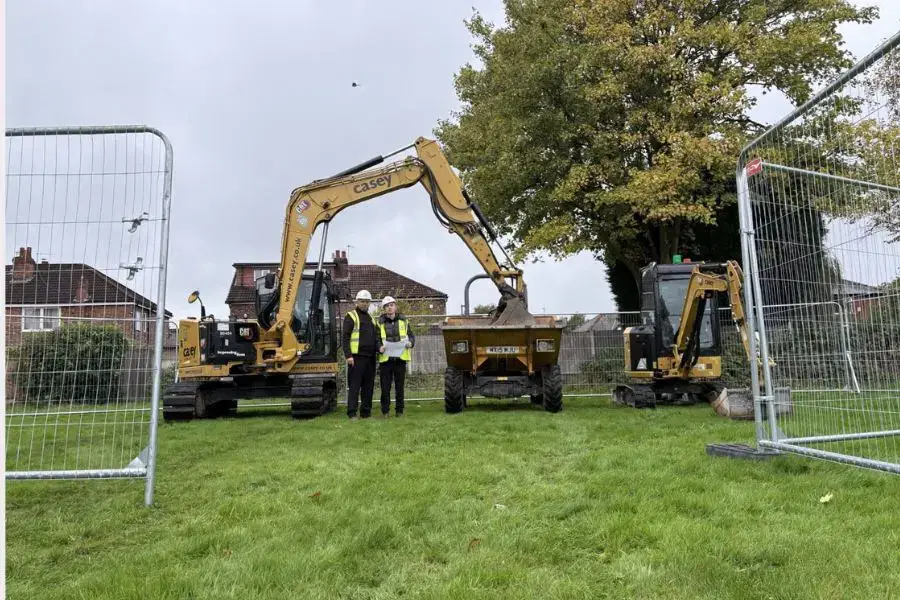
Longford Brook is now undergoing work, known as de-culverting or ‘daylighting’, to bring it back over ground for the first time in almost a century.
The work is part of the exciting £6m transformation of the park, supported by the National Lottery Heritage Fund.
The idea is to prevent regular flooding of Longford Park Rose Garden and other parts of the park. Shallow dips called swales are being created around the park to take excess water when rainfall is heavy.
The method has the approval of the Environment Agency, which has also provided funding for the work. It is seen as a sustainable and low-maintenance solution to the increasing risk of flooding.
New wetland planting will provide protection to the brook embankments and attract new wildlife. Contractor Casey is carrying out the work with help from sub-contractor Pioneer.
Historians report that the brook used to be four or five feet deep and five or six feet wide after heavy rain. It was culverted gradually, over 50 years, going completely underground in 1936. In some sections, the work created extra space for cricket and football pitches.
The work to open the brook back up has been split into three phases. It will begin with a small, meandering lake surrounded by green mounds on the Cromwell Road side of the park.
Next, a pretty stream through the disc golf area will be created. Finally a watercourse will be reinstated on the fairground field, north of the athletics track. Two culverts will be created to channel the water underneath new paths. The work will take a few months to complete.
Visit the People Place and Nature Project Announcements on the Council website for latest updates.
Cllr Tom Ross, Leader of Trafford Council, said: “We are delighted to see this work starting. Thanks must go to the project team, partners and contractors who are making this exciting change happen.
“The restored and enhanced brook will be a haven for wildlife as well as a lovely feature for visitors to enjoy. It will help solve waterlogging problems elsewhere in the park, meaning the grassy areas can be better used all year round.”